
Why Wheel Loaders Stand Out as a Superior Material-Handling Equipment in Construction and Logistics
Most project delays do not start with bad planning — they start with the wrong equipment. Discover why wheel loaders are the top choice for material handling in construction and logistics.
Key Takeaways
- Wheel loaders are among the most versatile material-handling equipment construction teams can deploy, capable of moving bulk aggregates, clearing debris, feeding stockpiles, and loading trucks in a single shift.
- Proper material handling with a wheel loader reduces site hazards, protects workers, and keeps operations running on schedule.
- The right wheel loader for your fleet depends on load size, terrain, and application. SDLG wheel loaders offer a compelling combination of reliability, operator comfort, and low total cost of ownership.
Material movement is constant in construction and logistics. Aggregates, soil, demolition debris, palletized goods, bulk commodities — getting these materials from one point to another quickly, safely, and efficiently is the engine that keeps any project or facility running. When that movement slows down, everything downstream slows with it.
Wheel loaders are crucial material-handling equipment on job sites and logistics warehouses because they solve a fundamental problem: moving large volumes of material fast, with minimal setup, on surfaces that other equipment cannot easily handle. They are agile enough to work in active construction zones, powerful enough to load heavy trucks in a few passes, and practical enough to be redeployed across tasks and sites throughout the day.
Discover how wheel loaders are optimizing operations and material handling day to day.
How Wheel Loaders Are Used in Material Handling
Understanding how to deploy a wheel loader effectively for proper material handling can transform how a construction or logistics team operates.
1. Bulk Aggregate Loading and Stockpile Management
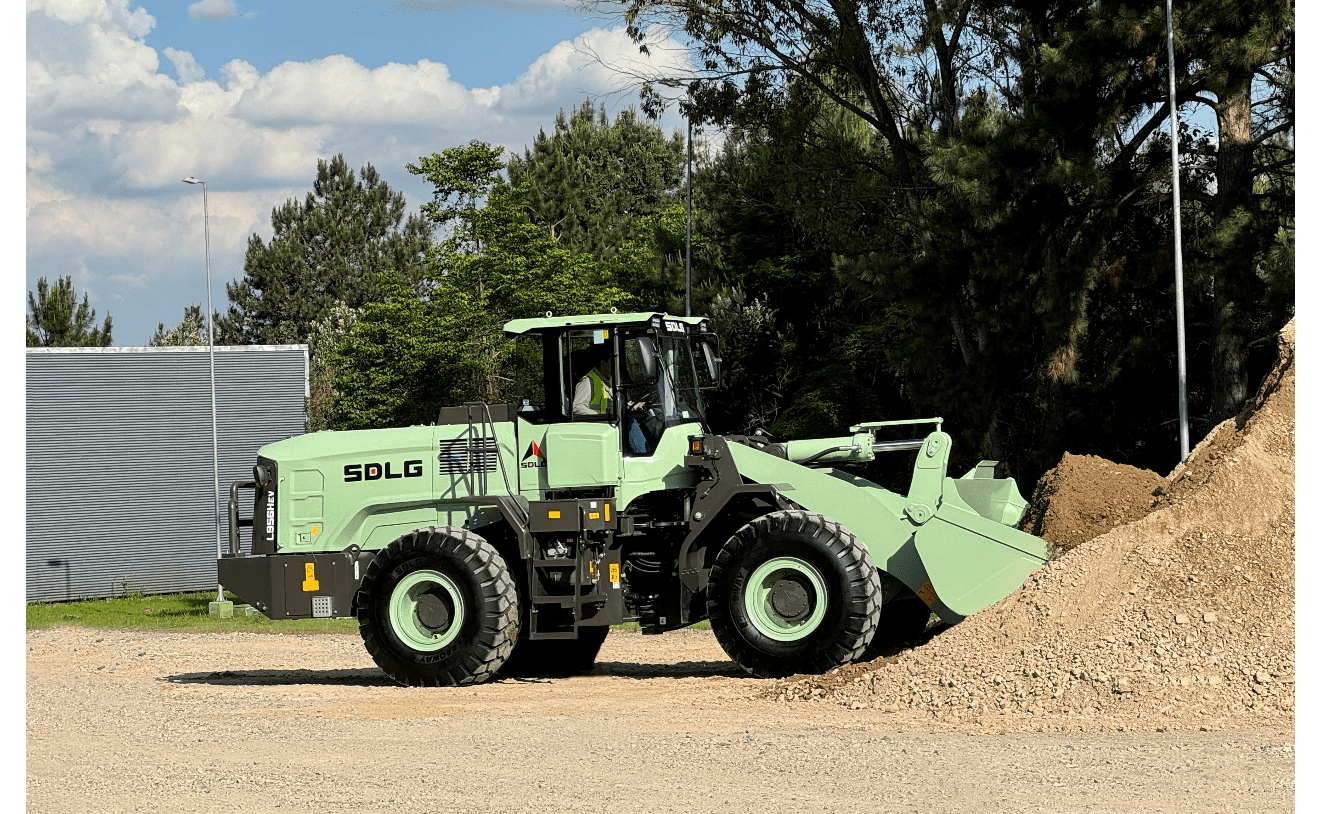
On any active construction site, the movement of sand, gravel, crushed stone, and fill material is relentless. A wheel loader handles this efficiently and precisely, scooping material from a stockpile and loading it into dump trucks or mixing stations without additional handling.
In a concrete batching operation, for example, a single wheel loader can continuously feed aggregates into a hopper while trucks cycle in and out — a flow that manual labor or smaller equipment simply cannot sustain at the same pace. The ability to scoop, carry, and dump in one smooth motion significantly reduces cycle time per load.
Operations that run tight aggregate cycles reduce idle time for trucks and crews and keep concrete plants and batch operations running at full capacity.
2. Site Clearing and Debris Management
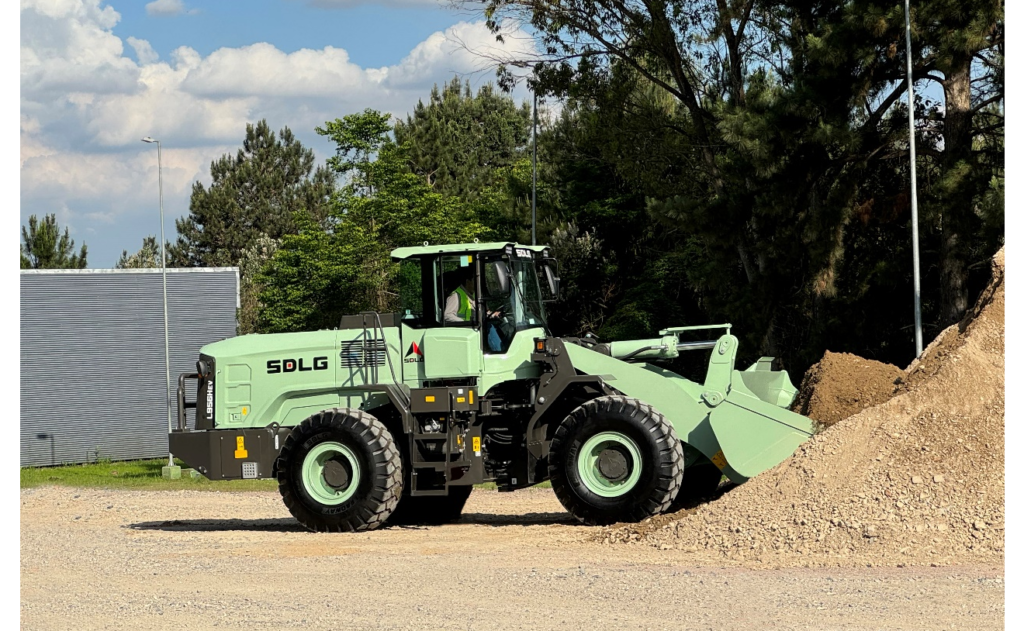
Before any construction begins, sites need to be cleared. After demolition, the same is true. Wheel loaders are built for messy, high-volume work, such as pushing, scooping, and transporting materials. They move bulk debris from the work area to a staging zone or waiting truck with minimal repositioning, keeping the clearing phase productive.
3. Loading and Unloading in Logistics and Warehousing
The role of wheel loaders extends well beyond construction sites. In logistics yards, port facilities, and industrial warehouses, they serve as the primary material-handling equipment solution for bulk commodities. Ports handling bagged cement, coal terminals, grain facilities, and aggregate suppliers all rely on wheel loaders to move product efficiently between storage and transport vehicles.
The right attachments, including pallet forks, grapple arms, and specialized buckets, turn a wheel loader into a multi-role tool that adapts to the material at hand. This versatility reduces the need for multiple specialized machines and the associated costs.
4. Road Construction and Earthworks
Wheel loaders work alongside motor graders and compactors to prepare sub-base materials, feed paving operations, and clear loose material from the road corridor. Their ability to move substantial volumes quickly keeps the entire paving train from bottlenecking.
5. Reducing Material Handling Hazards on the Job Site
An underappreciated benefit of a wheel loader is its role in reducing material handling hazards. Moving heavy aggregates or demolition debris manually or with undersized equipment creates real risk: strain injuries, unstable loads, and accidents from overloaded vehicles or improper lift angles.
A properly specified wheel loader with an appropriate rated load capacity reduces the need for manual material movement, standardizes load management, and gives operators clear sight lines and stable controls. Modern machines designed with operator safety in mind — including ROPS/FOPS-certified cabs, load indicators, and rearview systems — actively reduce the risk of site incidents.
Proper material handling is a safety obligation, and the right wheel loader is a direct investment that pays off in the long run.
Choosing the Right Wheel Loader for Your Operations
In construction and logistics, the speed and safety of your material flow depend heavily on the quality of equipment doing the moving. Wheel loaders handle the kind of volume, frequency, and variety of material handling tasks that other machines cannot match — and they do it with speed, flexibility, and a size that suits most active job sites.
However, not every site needs the same machine. The key variables are load weight, material density, surface conditions, and cycle frequency.
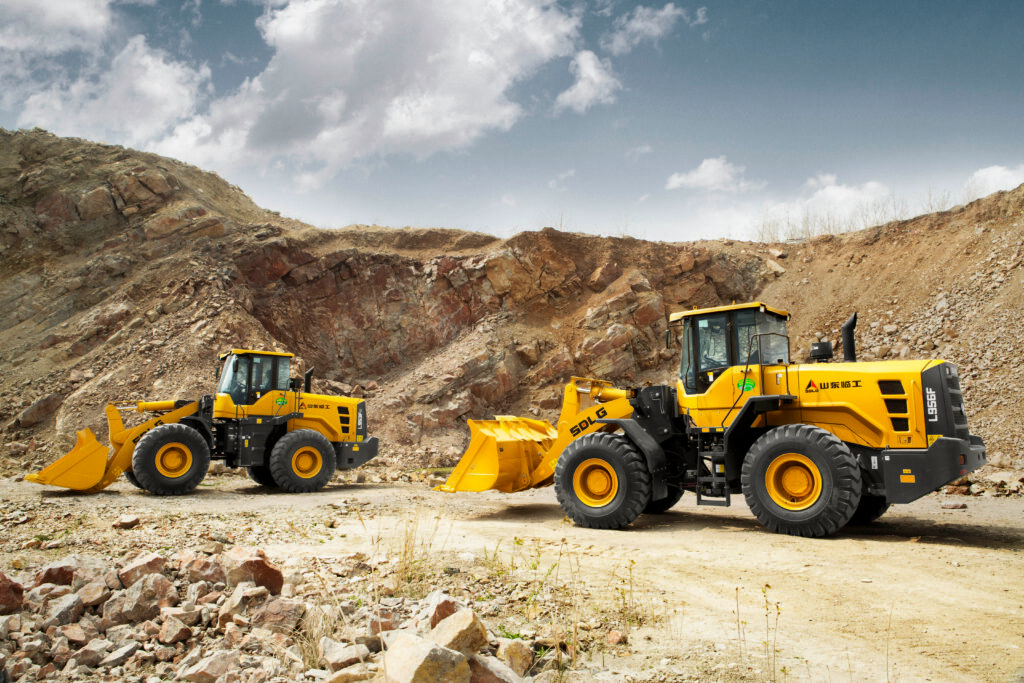
If you’re looking for material-handling equipment in the Philippines, turn to SDLG. SDLG wheel loaders are designed for comfort and control, with spacious operator cabins, ergonomic controls, and hydraulic systems calibrated for responsive, precise bucket operation.
Whether you are feeding a concrete batch plant, loading trucks at a logistics yard, or clearing a site for the next phase of construction, a properly chosen wheel loader keeps the operation moving and the crew protected.
Topspot carries SDLG wheel loaders built for exactly these environments. If you’re looking for wheel loaders for sale in the Philippines, let’s talk.
Contact Topspot today to find the right machines for your project.
Frequently Asked Questions (FAQs)
1. What is the average fuel consumption of a mid-sized wheel loader per operating hour?
Fuel consumption varies by model, engine tier, and application intensity, but a mid-sized wheel loader typically consumes between 8 and 15 liters per hour under normal working conditions. Operations involving continuous full-bucket loading at high cycle rates will trend toward the upper end, while lighter-duty or intermittent use will consume less.
2. Can a wheel loader replace an excavator on a construction site?
Not entirely. Wheel loaders and excavators serve different primary functions. Excavators are purpose-built for digging, trenching, and precise placement work. Wheel loaders excel at moving large volumes of loose material across relatively flat ground at speed.
On many construction sites, both machines are present because they complement each other.
3. What attachments are commonly used with wheel loaders in logistics operations?
Pallet forks are the most common attachment for logistics applications, allowing the wheel loader to handle palletized cargo in yards and warehouses. Log grapples are used in forestry and lumber yards. High-dump buckets suit operations that require discharging material into elevated hoppers or containers. Multi-purpose buckets with integrated tines offer a hybrid function, useful for handling both loose and balled materials at waste and recycling facilities.
